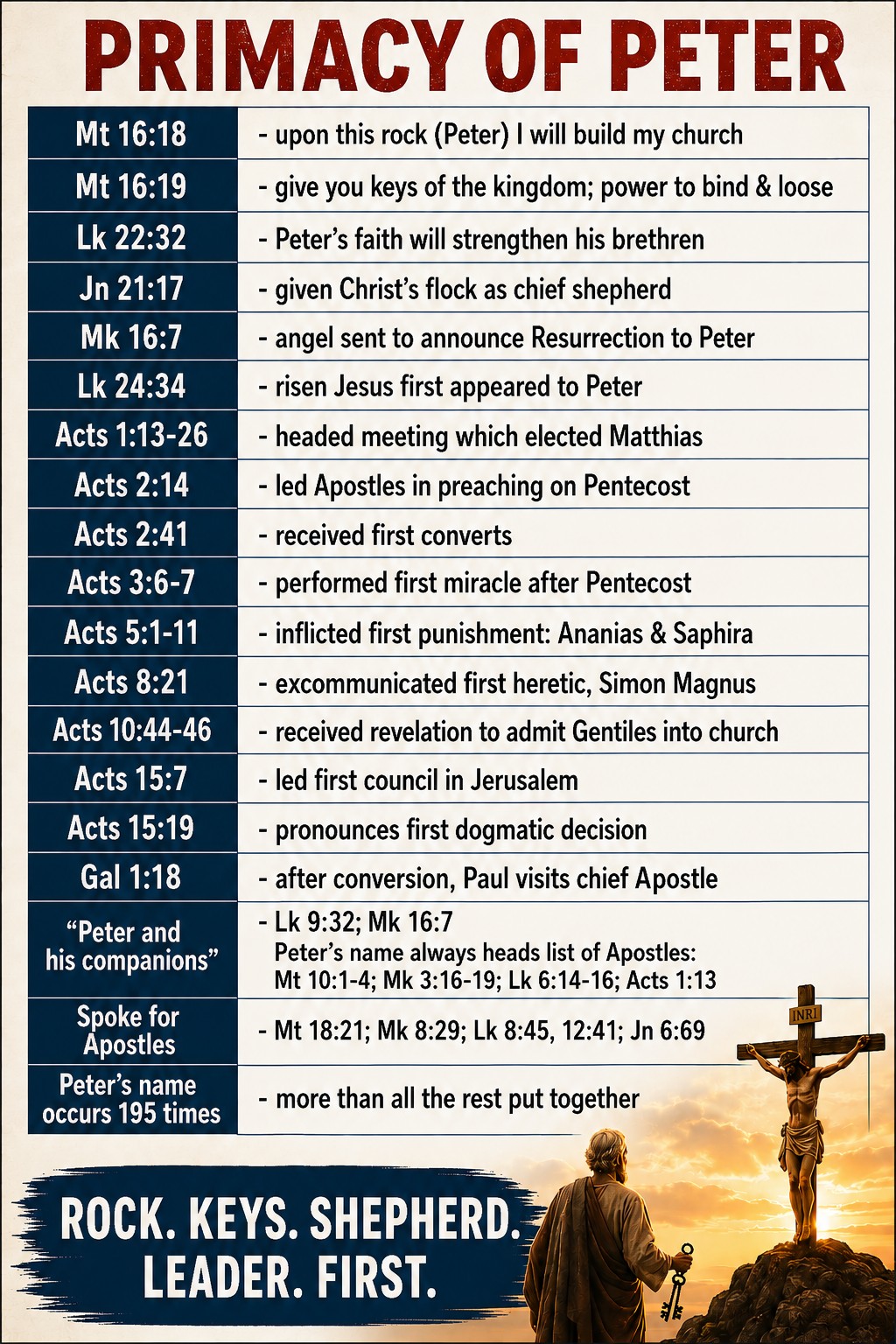
When Judas died, Peter said, “Let another take his office” (Acts 1:20), and Matthias replaced him. THE MAN DIED BUT HIS OFFICE CONTINUED.
Paul later told Timothy to take what he had received from Paul and “entrust [it] to faithful men who will be able to teach others also” (2 Timothy 2:2). The apostles clearly expected their teaching and ministry to continue through other men.
And that is exactly what the earliest Christians said happened. Around A.D. 96, Clement wrote that the apostles appointed ministers and provided that, when they died, “other approved men should succeed them in their ministry” (1 Clement 42–44). Around A.D. 180, Irenaeus pointed to the succession of bishops from the apostles as evidence of where authentic apostolic teaching could still be found (Against Heresies 3.3).
Now consider Peter. In Isaiah 22, the Davidic king gives his chief steward “the key of the house of David,” a position of authority that could pass from one man to another. Jesus, the Son of David, later tells Peter, “I will give you the keys of the kingdom of heaven” (Matthew 16:19). He also tells Peter to “strengthen your brethren” (Luke 22:32) and later commands him three times to tend and feed His sheep (John 21:15–17).