Why Does the Church Baptize Young Children?
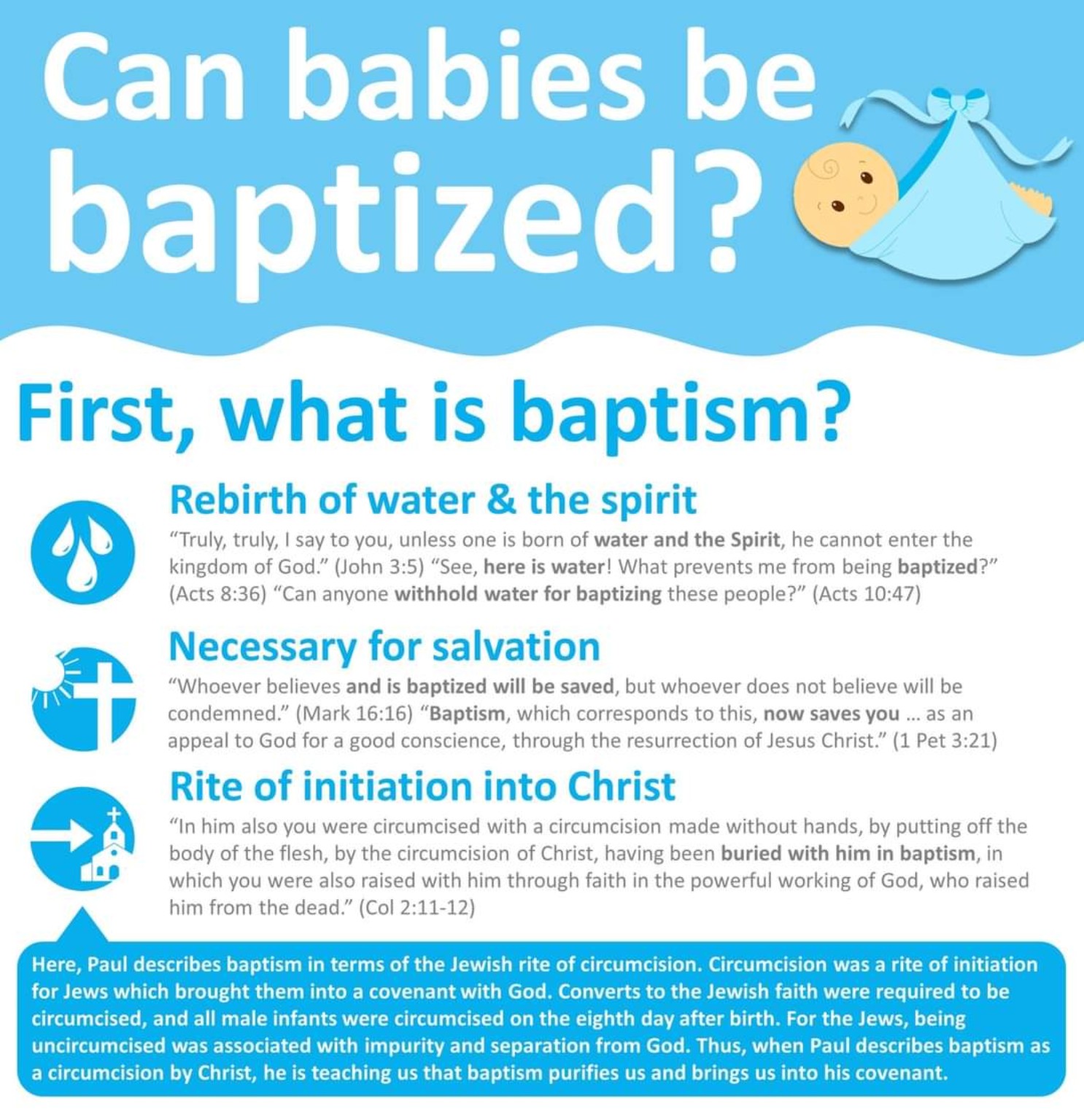
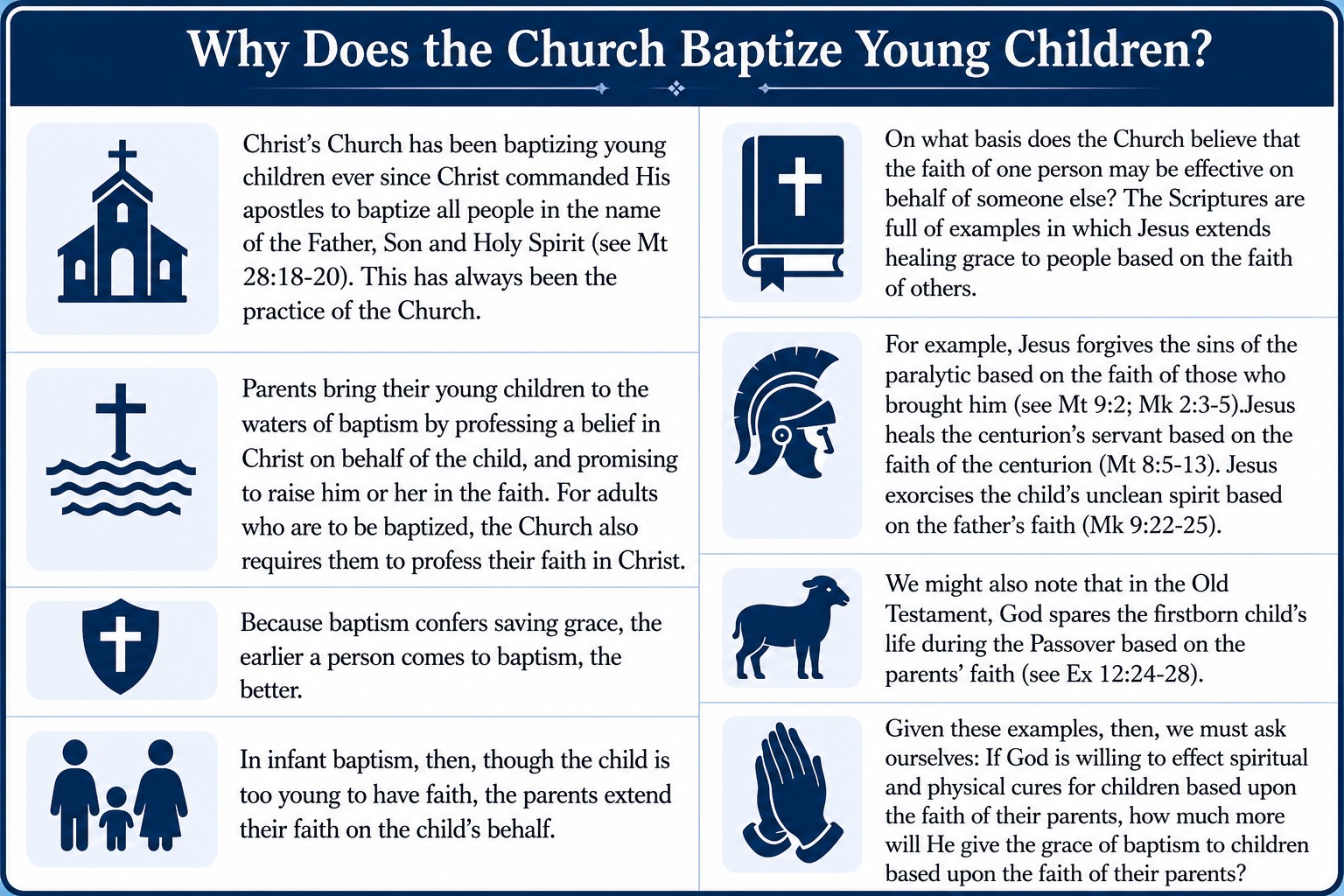
This visual summarizes the case for bringing young children to baptism, including Christ’s command to baptize all nations and biblical examples of one person’s faith benefiting another.
Infant Baptism in the Early Church
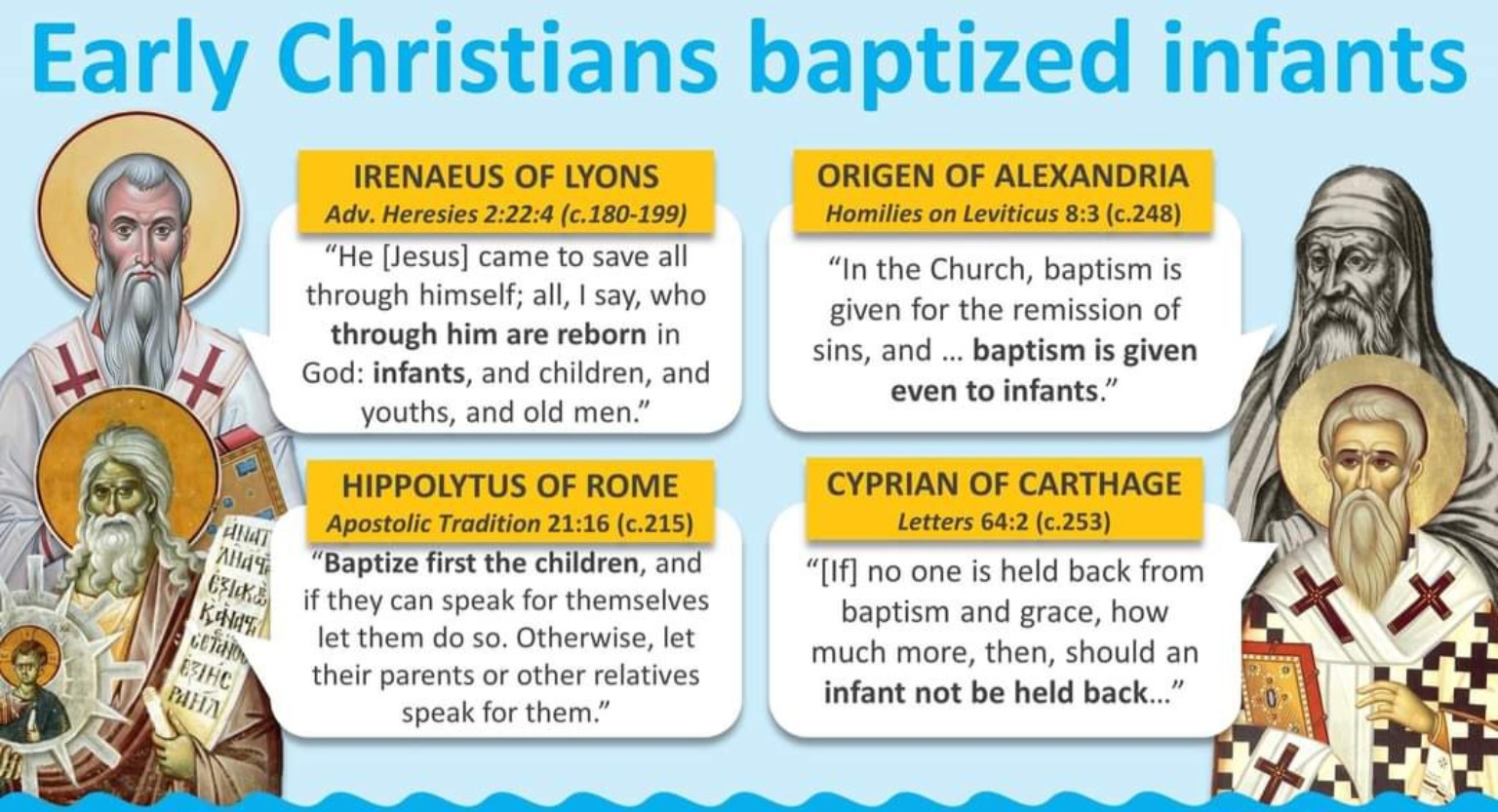
The early Christian record does more than show that infant baptism eventually became accepted. These witnesses describe it as an established practice and, in several cases, explicitly connect it to the Apostles.
Hippolytus of Rome — c. A.D. 215
“Baptize first the children; and if they can speak for themselves, let them do so. Otherwise, let their parents or other relatives speak for them.”
— Apostolic Tradition 21
Children who are too young to answer for themselves are baptized, with parents or relatives answering on their behalf.
Origen — c. A.D. 244
“The Church received from the apostles the tradition of baptizing infants too.”
— Commentary on Romans 5:9
Origen does not merely approve infant baptism. He explicitly says the practice was received from the Apostles.
Cyprian of Carthage — A.D. 253
“As to what pertains to the case of infants… we all thought very differently… that the mercy and grace of God ought to be denied to no man born.”
— Letter 64 (to Fidus)
Cyprian and a council of 66 bishops were considering whether baptism should be delayed until the eighth day after birth. Their conclusion was no—even a newborn should not be denied baptism. The controversy wasn't whether infants may be baptized. It was whether one should wait eight days.
John Chrysostom — A.D. 388
“For this reason we baptize even infants, though they are not defiled by personal sins, so that there may be given to them holiness, righteousness, adoption, inheritance, brotherhood with Christ…”
— Baptismal Instructions 3.6
Chrysostom explicitly says, “we baptize even infants,” and explains the spiritual benefits they receive despite having committed no personal sins.
Augustine — A.D. 408
“The custom of Mother Church in baptizing infants is certainly not to be scorned… nor is it to be believed that its tradition is anything except apostolic.”
— The Literal Meaning of Genesis 10.23.39
Augustine connects infant baptism directly to apostolic tradition.
The Biblical and Early Christian Case for Infant Baptism
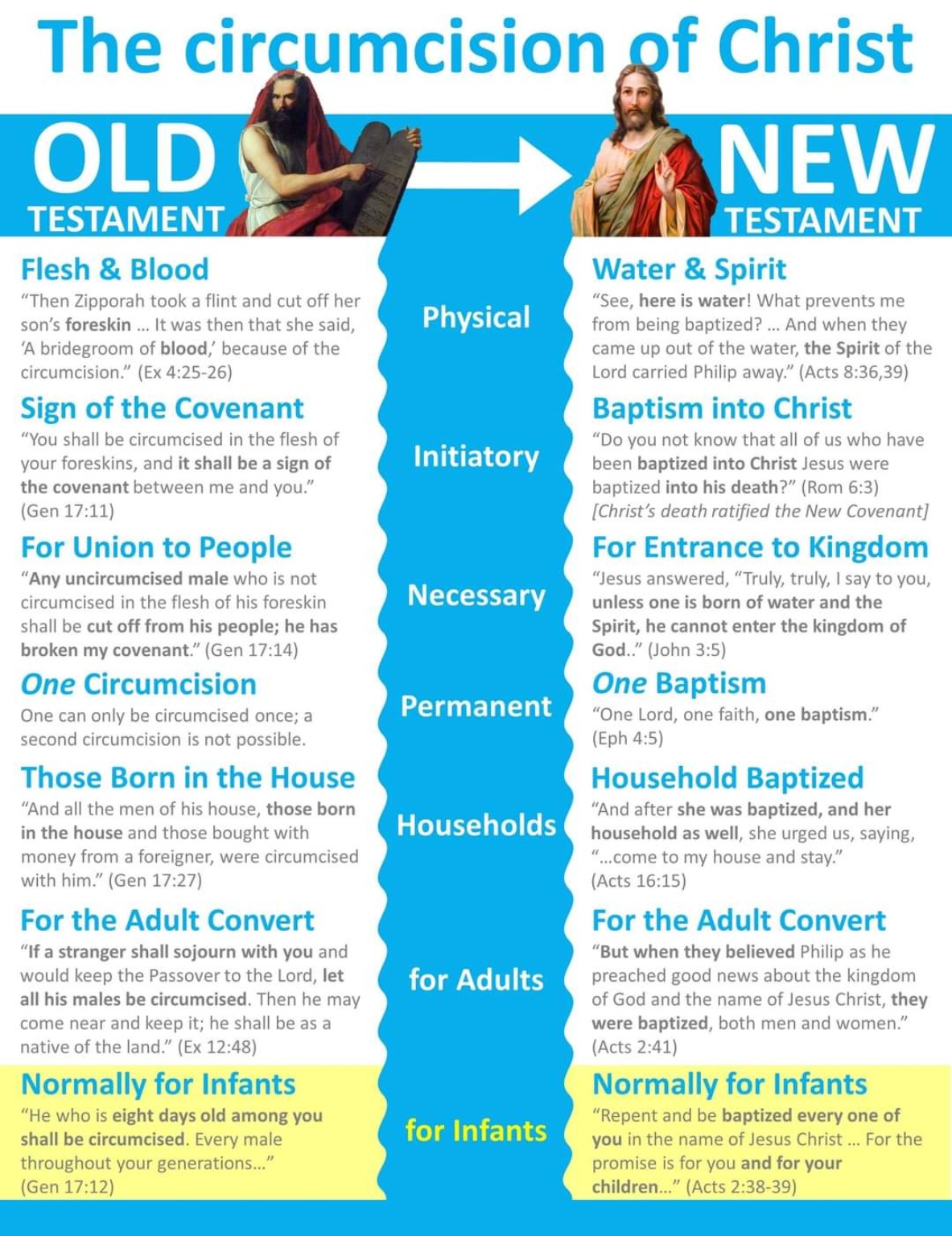
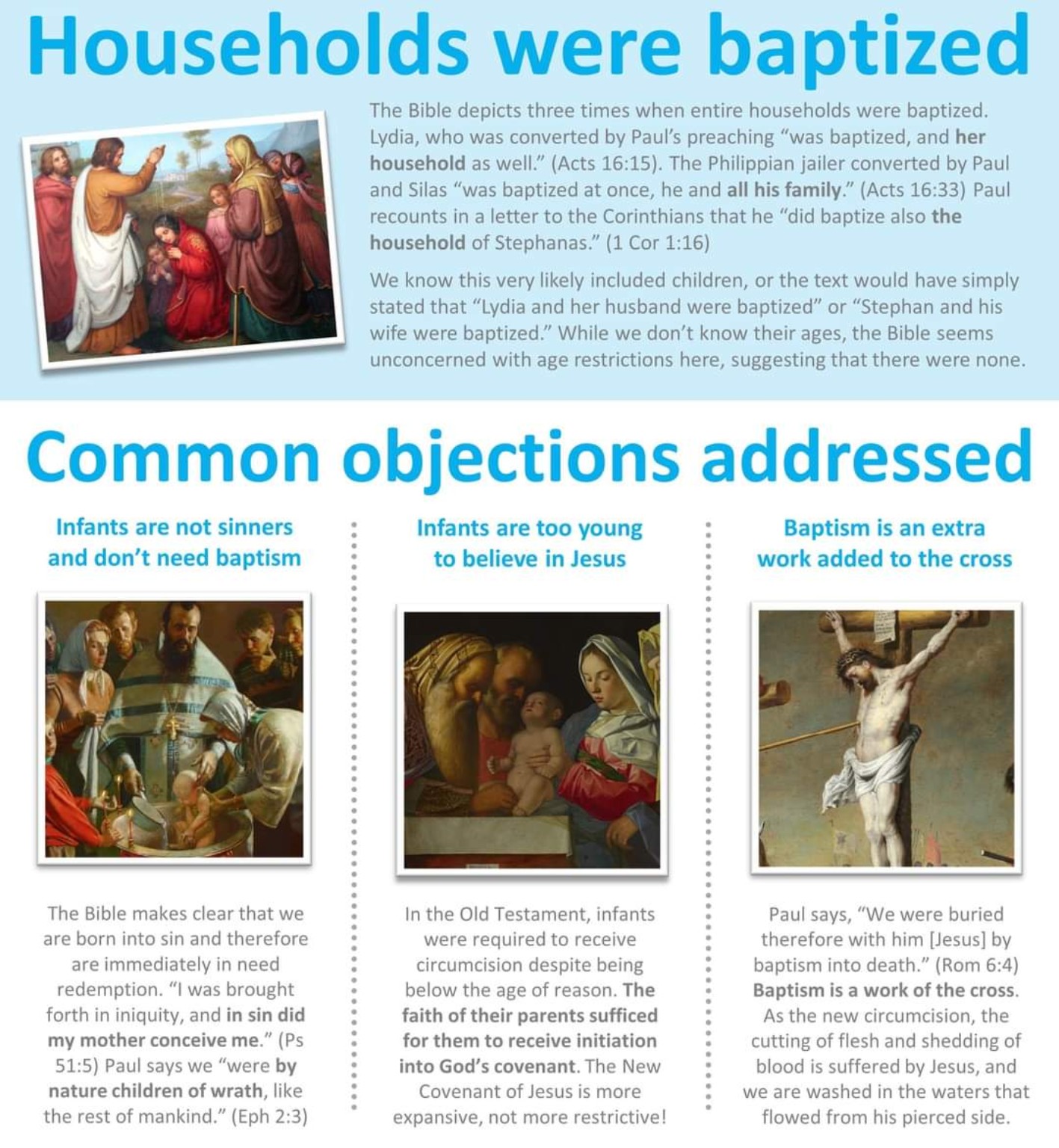
These visuals bring together the biblical covenant argument, household baptisms, common objections, and testimony from the early Church.